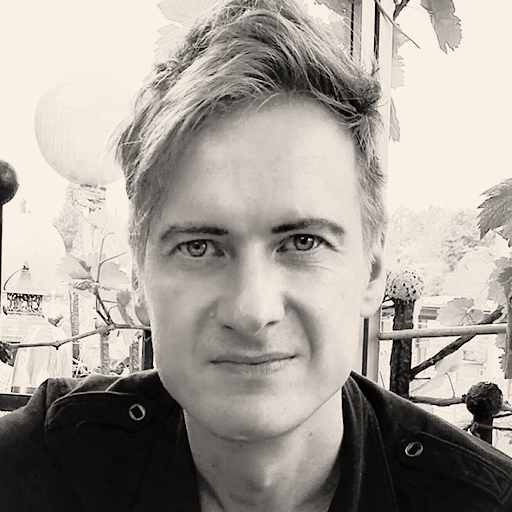
We republish this article in translation with kind permission from Casablanca magazine 2/2025.
“The malaise is profound, and Michel Houellebecq is its prophet”: this is the formula on which most culture sections of internationally renowned news outlets have agreed. It serves as a justification for repeatedly summoning the author, as a kind of sacred oracle, to comment on day-to-day political developments—as, for example, when two literary scholars recently questioned the Frenchman, for the Danish newspaper Information, about the latest water-level readings concerning the Islamization of what was once the Grande Nation.
But Houellebecq is also readily enlisted as a star witness in articles that are primarily political in nature, as in the case of Klaus Geiger in Die Welt, where the journalist is reminded by the situation of France’s eroding political center of the constellation depicted in Houellebecq’s novel Submission (2015)—a diagnostic applicable to many other European states as well, and which Geiger promptly labels the “Houellebecq problem”.
Prophet, seer, sage of the West: in fact, the novelist has occupied this role for his media audiences ever since the publication of his second novel, The Elementary Particles (1998). From that point on, this unlikely pop star of literature seemed to anticipate latent shifts in the tectonic plates of society with seismographic foresight. In the case of The Elementary Particles, this concerned the debate over the genetic optimization of the human being. The novel’s ambivalent science-fictional end vision of a new, cloned humanity—one that has overcome sexual dimorphism and, with it, a whole host of other ugly things such as narcissism, suffering and death—was widely taken to have anticipated the decoding of the human genome announced in April 2000 by the biochemist Craig Venter.
From his Elementary Particles (1998) on, this unlikely pop star of literature seemed to anticipate latent shifts in the tectonics of society with seismographic foresight.
Houellebecq’s third novel, Platform (2001), then appeared to anticipate, with prophetic vision, the Islamist terrorist attack in Bali one year later. Yet the undisputed coronation mass of this process of elevation—anointing the author as a modern Nostradamus of the near-future, upgraded with high-precision tuning—unquestionably took place with the publication of Submission in 2015.
In that novel, set in a France of the year 2022 teetering on the brink of civil war, riven by deep ideological divides and shaken by sporadic Islamist terrorist attacks, the candidate of an Islamic party becomes president of the Republic because the Left and Muslims join forces to block Marine Le Pen’s Front National, who had been victorious in the first round of voting. One is familiar with comparable scenarios from Germany, where the sovereign (the people eligible to vote), in an election morbidly referred to as an “Urnengang” (“walk to the polls”), opts for center-right politics, but is only granted by the left of center representatives a government of national unity forged to fight for “Our Democracy”, in disregard of the sovereign’s wish. In reality, this goes only as far as electoral arithmetic allows. But in Houellebecq’s literary speculation, this government is borne and led by the fictional “Brotherhood of Muslims” party.
The background story of Submission reminds one of familiar scenarios from Germany.
On the day Submission was published, the brothers Saïd and Chérif Kouachi stormed the offices of the satirical magazine Charlie Hebdo and shot eleven people dead with their Kalashnikovs. Another eleven were injured, some of them seriously. The perpetrators claimed to have acted on behalf of al-Qaeda in Yemen. On that same 7 January 2015, issue no. 1177 of the magazine appeared. On the cover: a caricature of Michel Houellebecq who, with an oversized nose (a sign of his unusual powers of scent?), a magician’s hat perched on his thinning hair, and half-open eyes sunk deep into black hollows, smokes a crumpled cigarette held in bohemian fashion between his middle and ring fingers. The headline reads: “Les prédictions du mage Houellebecq“. In the form of speech bubbles, the reader is immediately presented with two samples of these predictions by the mage.

The first concerns the physical decline so often thematized in Houellebecq’s œuvre: in 2015, he will lose his teeth—a deca-dental uprooting. The second stands in the context of the gentle Islamization that takes place in Submission: in the year 2022, the slightly tipsy-looking caricature Houellebecq prophesies, he will be celebrating Ramadan.
Prophecy or Prognosis?
This satirical image of the unkempt, rumpled writer, lavishly endowed nevertheless with clairvoyant gifts, was subsequently not only taken seriously; it was also reproduced ad infinitum and ad nauseam. No end is in sight. But is it actually true? Can Houellebecq legitimately be described as a prophet, or at least as a prognosticator?
The historian Reinhart Koselleck has precisely elaborated the differences between the concept of prophecy and that of prognosis. While both, he argues, are forms of expectation, prophecy is tied to religious concepts of transcendence and, by virtue of divine authority, proclaims the last things in a future beyond empirical verification, whereas prognosis, which emerges in the course of secularization in the modern era, is based on a rational analysis of the present and calculates probabilities of development within this world. Prophecy, embedded in a framework of salvation history and often also of damnation, lays claim to absolute normative validity. Prognoses, by contrast, are aware of their hypothetical character and fallibility. They view the future as open and malleable. Above all, prognoses can influence the occurrence of what they predict.
Prophecy, embedded in a framework of salvation history and often also of damnation, lays claim to absolute normative validity. Prognoses, by contrast, are aware of their hypothetical character and fallibility.
Prophets suffer. They are passive instruments of a transcendent revelation they never sought in the first place. One wants merely to pop out to buy cigarettes, or, like Moses, one is quietly tending one’s sheep—and suddenly the bush is burning, the LORD reveals himself, and one is issued unavoidable commissions that up-end not just the evening but the rest of one’s life. It is hardly surprising that Moses initially strings excuse upon excuse in an attempt to let this hard-to-swallow cup pass him by. Nor is it astonishing that God is no Habermasian and that the “unforced force of the better argument” is therefore not something one can appeal to: He does not argue.
It is not astonishing that God is no Habermasian and that the “unforced force of the better argument” is therefore not something one can appeal to: He does not argue.
What Immanuel Kant would categorically reject in his moral philosophy—namely, that a human being be degraded to a mere means to an end—is precisely what occurs in prophetic inspiration, where, in the literal sense, the divine breath enters the prophet like a kind of forced ventilation. Bye-bye, autonomy of the subject! Today, one would probably describe such spiritual coercion as an assault and turn to the appropriate reporting portals.
Prophets live dangerously. A glance at the Book of Books and the Jewish apocrypha suffices: Jeremiah, arrested and thrown into a cistern, narrowly escaped death; Isaiah was persecuted and in all likelihood executed by being sawn in two; John the Baptist lost his head through a fatal conjunction of lust (Herod Antipas), calculation (Herodias) and payment for a dance (Salome). Likewise the ancient seers of Greek myth, such as Cassandra or Tiresias, could sing a (lamenting) song about the social isolation, despair, and curse-like quality that accompany their gifts.
In this aspect of ostracism and persecution—the reward for proclaiming unwelcome truths in a hostile environment, not because one can but because one must—one might discern a point of contact with Houellebecq. After the Charlie Hebdo attack, he left Paris and has since lived under police protection; accusations of Islamophobia have been raised, and a criminal complaint for incitement to hatred was filed by the rector of the Grand Mosque of Paris, Chems-Eddine Hafiz, though it was later withdrawn. Still, at least for the time being, there is no fatwa of the kind issued against Salman Rushdie, which would seek to transform his killing into an act of worship for dutiful, pious Muslims.
At least for the time being, there is no fatwa of the kind issued against Salman Rushdie, which would seek to transform Houellebecq’s killing into an act of worship for dutiful, pious Muslims.
None of this makes Houellebecq a veritable prophet. The religious is often the content of his texts, but not their mode of production. Nor can he easily be described as a prognosticator. However much sociological theory, positivism, the natural sciences, and political science find their way into his work, it nevertheless remains, at all times, a work of literary imagination. One cannot even say that Houellebecq participates, in any strict sense, in the race between science and fiction that is characteristic of literary products of the “Third Culture” situated between the humanities and the natural sciences.
A Study in Opportunism Rather Than an Analysis of Islam
But what, then, is Submission, if it is neither prophecy nor prognosis? In my view, the novel offers an experimental setup in the form of a milieu study, one that investigates how the academic middle class behaves when a non-violent Islamization of society takes place. The focus, then, is not on Islam itself, with all its religious prescriptions that fall behind the civilizational achievements of the European Enlightenment. That it is a freedom-hostile, premodern religion that rejects the emancipation of women, sexual and religious self-determination, and pluralism of opinion, and that sets benchmarks in terms of group-based enmity toward others, is taken as a given.
The first-person narrator François is a classic Houellebecq narrator: his social environment is largely confined to the professional sphere. He is a university lecturer at the faculty of literature at the Université Sorbonne Nouvelle in Paris. As such, he regularly draws from the sexual reservoir provided by his students, as a renewable resource. This produces a relationship model of serial monogamy, typically limited to the duration of an academic year. One such year, in the narrative present, is already approaching its end. Love is out of the question in all this, for that would presuppose the capacity to love.
Love is out of the question in all this, for that would presuppose the capacity to love.
This, of course, does not mean that the atrophy of one’s own capacity for love cannot be mourned extensively—which contributes to the habitual self-pitying tone of the typical Houellebecq protagonist. That sexual degeneration is difficult to reconcile with an empathic, romantic notion of love—according to which love serves as a substitute religion, a solution for all areas of life—is painfully clear to Houellebecq’s sad protagonists. Yet they lack both the strength to give up the half-hearted pursuit of impossible love in order to immerse themselves entirely in the purely sexual, and the decisional strength to draw the radical consequences of the “system” of love.
If this system is “based on the construction of mutual total acceptance in the mode of highest relevance”, as the systems theorist Peter Fuchs postulated, then it means: either/or, tertium non datur. The malaise of the prototypical Houellebecq hero stems from his inability to choose between the either and the or. He wants to eat the cake and have it, too.
The relationship between Michel and Valérie in Platform constitutes the only attempt in Houellebecq’s novels to escape this binarism through a both/and of sexual vagabondage and romantic love. The coup consists in engaging in sexual activity with others while allowing no weakening of the mutual emotional bond between themselves and consistently resisting seduction—which is exposed and abhorrently rejected in its marketized form as narcissistic distinction. This has nothing to do with the recent glorification of multiple lovelessness, which celebrates one’s own interchangeability in the postmodern sharing economy under the name “polyamory”, since in Michel and Valérie’s third way the primacy of the couple remains untouched. “Highest relevance” cannot be multiplied. When this square-the-circle attempt threatens to succeed, and Michel seems to have found his life’s perfect partner—an egg-laying (rather, egg-licking), wool-providing, milk-giving she-beast (the German “eierlegende Wollmilchsau”, a term used in economics to describe one single provider of everything a society needs)—the author resorts to the drastic measure of a mors ex machina, killing Valérie in an Islamist attack on a sex club and thereby forever removing the possibility of happiness. But it was close.
If love is communism for two—and thus a post-religious form of dyadic communalization—it is natural to seek the original of that which love is meant to substitute, especially when this substitution fails: the religious. This spiritual form of “reconnection”—if one follows the derivation of religio from religare, as found in the Christian apologist Lactantius and later in Augustine—serves as the focal point of longing for holistic belonging in the post-uterine exile of Houellebecq’s unbonded, atomized protagonists. And so his unhappy heroes, already since the debut novel Whatever (1994: the original title translates as “Extension of the Domain of Struggle”), repeatedly prowl medieval churches and elegiacally conjure the “communion of the faithful” carried out there in distant times, which becomes a counter-image to the assaults on subjectivity that they endure in their disenchanted and deadened world. In it, everything is available—except solace, which is currently out of stock and will not come back in.
Part 2 will be out Feb 20.