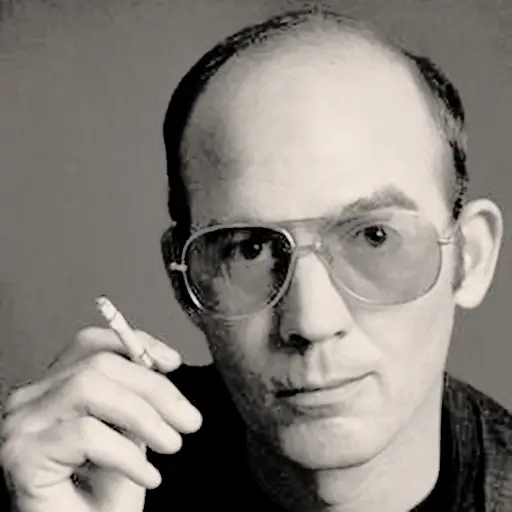
The Viennese sociologist and youth researcher Bernhard Heinzlmaier (b. 1960) recently argued on German TV that Europe is currently being squeezed by two hyper-sexualized movements: on one side by an aggressively expansionist Islamism, and on the other by an equally authoritarian “woke” trans ideology. Heinzlmaier, for decades a member of the Social Democratic Party, drew on Herbert Marcuse’s concept of “repressive desublimation”. This striking thesis is in need of explanation. What is meant by the hyper-sexualization of Islamism?
One thing is clear, however: today, those who convert to Islam are rarely seeking spiritual renewal. A few decades ago, things looked different: the longing of the “children of Marx and Coca-Cola” (Godard) for alternative forms of spiritual meaning was directed primarily toward Eastern religions such as Buddhism, Zen Buddhism, or Hinduism. But Islam, too, held an exotic appeal—and at times even fascination—among certain seekers of meaning, as demonstrated by prominent converts such as the German Kommunarde Rainer Langhans and the German writer Hadayatullah Hübsch, the British folk-pop singer Cat Stevens, Irish folk duo Richard and Linda Thompson, or the French philosopher Roger Garaudy. The communist Garaudy (The Contemporary Relevance of Marx’s Thought, 1964) converted to Islam in 1982 and later joined the ranks of Holocaust deniers. Cat Stevens converted in 1977 and, a few years later, voiced support for the fatwa issued by Iran’s revolutionary leader Ayatollah Khomeini against Salman Rushdie—something he later retracted. The left-wing writer Hadayatullah Hübsch, co-founder of Frankfurt’s legendary “Club Voltaire” and long-time contributor to the Frankfurter Allgemeine Zeitung’s arts and culture section, converted to Islam after a spiritual experience during a trip to Morocco. His daughter, Khola Maryam Hübsch, who according to her own account lives in an arranged marriage, is well known in Germany through numerous television appearances. In 2012, the German public broadcaster programme Morgenmagazin described her as “the public face of Muslim women in Germany”, even though her denomination, the Ahmadiyya, enjoys no general recognition within Islam and in some places is itself subjected to violent persecution.
In the 1970s and early 1980s, Islamic Sufism developed remarkable appeal within West Germany’s alternative and rock music scene—especially around the Krautrock band Embryo. A small but vibrant German Sufi scene emerged, sustained primarily by musicians and artists. At that time, Islam was a marginal phenomenon, a minority option—and particularly attractive to some precisely for that reason. But little now remains of the “drugs-in-the-Moroccan-desert” spiritual awakening that many Westerners claimed to have experienced, leading to conversion to Islam in the 1970s and 1980s.
Things are different now: Most converts of our own time are seeking neither exoticism nor alternative spiritual experiences. Theory is out, practice is in. People want clear rules, hierarchies, and identity. This is where the political ideology of Islam—Islamism—comes into play. The fact that radical Islamism contradicts all the ideals of freedom associated with the European Enlightenment is not perceived as a problem. On the contrary: it is precisely this that attracts today’s new converts. In a period of spiritual homelessness, permanent political crises, and widespread erosion of values, fanatical worldviews offer tangible advantages. The liberal bourgeoisie has reacted with a certain helplessness to the resurgence of authoritarian value orientations, while itself also indulging in the question “Which religion suits me?”.
The converts of our own time are seeking neither exoticism nor alternative spiritual experiences. Theory is out, practice is in. People want clear rules, hierarchies, and identity. This is where the political ideology of Islam—Islamism—comes into play.
Islamism is totalitarian, misogynistic, and on the rise: for the male authoritarian personality in particular, anti-democratic, patriarchal forms of rule appear highly advantageous. Added to this is the fact that shrinking social democratic and socialist parties in Europe not infrequently pursue a tactical alliance with Islamists, hoping for votes from the Muslim electorate—a strategy anticipated with unsettling precision by Michel Houellebecq in his 2015 novel Submission.