The defining trait of our time is not the absence of moral feeling but its excess—not ethical numbness but the intoxication of righteousness released from all restraint through a sense of moral absolutism.
Genocide. Nazi. Fascist. Racist. Settler-colonialist. It is perhaps banal now, at least to intelligent readers, to note that these terms have long ceased to function as analytical categories possessing any definitional specificity, historical particularity, or descriptive utility.
They don’t mean anything anymore—or rather, they mean everything and nothing simultaneously. They retain only an association with absolute evil, with the Holocaust and the systematic extermination programs of the twentieth century. But even this association no longer anchors these terms to determinate content. They have become floating signifiers, words that instrumentally organize symbolic economies, and perhaps material ones, while remaining radically empty of stable reference. Under temporal acceleration, they became categories whose historical horizons have collapsed. The result is a form of semantic total war, in which every disagreement can be moralized to the point of apocalypse.
Words like “genocide”, “racist”, “settler-colonialist” have become floating signifiers, words that instrumentally organize symbolic economies, and perhaps material ones, while remaining radically empty of stable reference.
The terms once possessed relatively stable descriptive content. A Nazi was a member of the National Socialist German Workers’ Party or its affiliated organizations, participating in a specific historical movement with identifiable ideological commitments. Genocide referred to the systematic attempt to destroy a national, ethnic, racial, or religious group as such—a term coined by Raphael Lemkin specifically to capture what happened to European Jewry and other victims of Nazi extermination policy. Fascism described a particular political formation emerging from interwar Europe, characterized by specific relationships between state, party and corporate power.

The terms carried enormous moral weight precisely because they described historical phenomena of almost unparalleled horror. Their power derived from their accuracy, their capacity to capture something real and horrifying about the world. But this very moral weight created an irresistible temptation: if you could successfully apply these terms to your enemy, you inherited the full force of their accumulated horror, something which George Orwell already observed had happened before the war against the real Nazis was even over. You could position yourself on the right side of the century’s most fundamental moral divide. More crucially, you could authorize violence that would otherwise have no justification.
If you could successfully apply these terms to your enemy, you inherited the full force of their accumulated horror, something which George Orwell already observed had happened before the war against the real Nazis was even over.
This abolishing of meaning was achieved through the complete functional inversion of moral language from descriptive to performative operation. These terms today rather perform the speech act of absolute designation, transforming their target into someone whose suffering becomes virtuous, even pleasurable—a form of moral nominalism, the separation of moral language from moral substance. They became our culture’s mechanism for licensing moral sadism, for eroticizing and sanctifying the pleasure taken in punishment and pain. “Punch a Nazi”, as the saying goes. They now act as liturgical triggers, helping one to enter a moral trance in which compassion and cruelty are indistinguishable.
The mechanism is conceptual parasitism. The terms feed on the moral weight of their original historical referents while severing any actual connection to those events. “Genocide” depends for its gravity on the gas chambers and killing fields, then gets applied to visa restrictions or campus speech codes. “Nazi” invokes Auschwitz while designating whoever opposes DEI mandates or supports border control. The word carries all the emotional charge of its paradigmatic case, while requiring none of the empirical markers that originally defined it.
To say “X is fascist” or “settler-colonialist” does not convey any information about X’s political or ideological commitments. It performs a single operation, establishing that X is maximally illegitimate and thus may—perhaps must—be subjected to unlimited violence. This is these terms’ sole remaining function: to license. They establish who stands outside the boundary of moral protection, who has forfeited the right to restraint, whose suffering can be enjoyed without guilt. And once the designation is made, once someone has been marked as Nazi or genocider or fascist, the question becomes unavoidable: What violence, exactly, have we authorized? What pleasure are we now permitted to take?
To say “X is fascist” or “settler-colonialist” does not convey any information about X’s political or ideological commitments. It performs a single operation, establishing that X is maximally illegitimate and thus may—perhaps must—be subjected to unlimited violence.
Welcome to the age of moral sadism!

Once you successfully designate your enemy as Nazi, as fascist, as settler, as genocider, as embodiment of absolute evil, several things happen simultaneously: traditional moral restraints (of so-called Christian bourgeois morality, Muslim traditional morality, etc.) dissolve entirely. You are not merely permitted but required to oppose them by any means necessary. Restraint becomes complicity; proceduralism becomes collaboration; mercy becomes betrayal of victims. Any form of sense or moderation becomes part of the original oppression. Then the violence becomes aestheticized. The suffering inflicted is no longer a tragic necessity but a righteous, sexy spectacle, something to be witnessed, recorded, celebrated, even enjoyed.
This leads to cruelty itself becoming virtue-signaling. The extremity of violence you’re willing to inflict becomes proof of your moral commitment. Restraint suggests insufficient recognition of evil; moderation implies moral weakness; calls for mercy reveal hidden sympathy with monsters. So the pleasure in suffering becomes sanctifying. You demonstrate your righteousness precisely through your capacity to enjoy the Nazis’ pain without guilt, to experience their suffering as aesthetic pleasure and moral affirmation simultaneously. Your enjoyment becomes evidence of your virtue rather than warning of your corruption.

Moral Sadism as Cultural Form
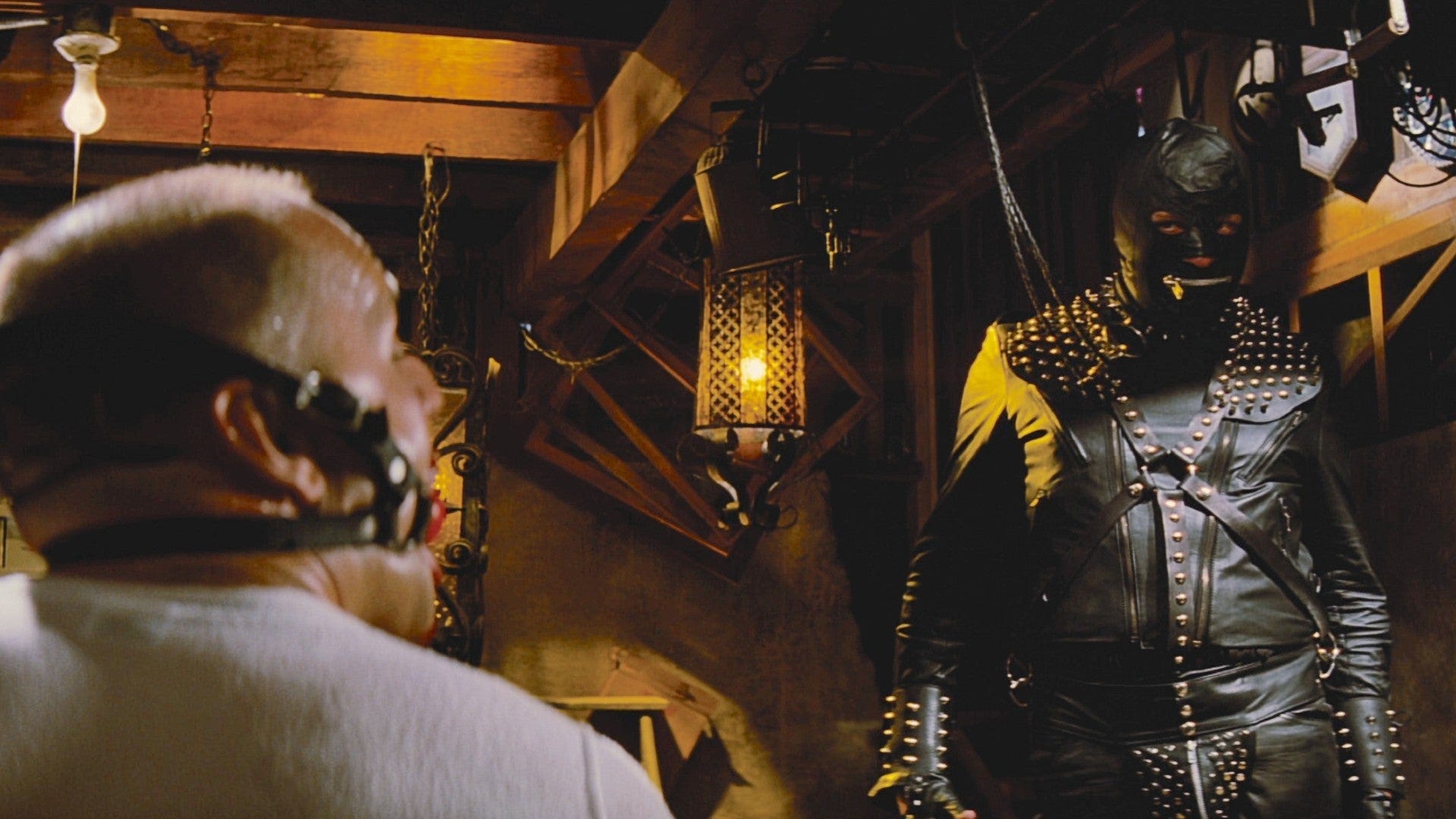
If theology once supplied us with rituals of absolution, popular culture now offers its substitutes, and the best aesthetic representation of this moral sadism can be found in the films of Quentin Tarantino. His cinema eroticizes revenge and teaches you to luxuriate in pornographic violence. His films provide the aesthetic regime for a new kind of pleasure: the slow, painful death of the Nazi; the prolonged torment of the white slaver—the creative brutality inflicted on those whose designation authorizes, indeed demands, the removal of all restraint. Violence becomes beautiful, even sexy, when directed with unrestrained anger at proper targets. Suffering inflicted becomes pleasurable to witness. Torture transforms into catharsis when the victim is in the correct category. Revenge is no longer the perpetuation of cycles of blood, but therapeutic completion, moral climax, the satisfying resolution where the credits roll on a corpse, leaving you feeling good.

The problem with analyzing Tarantino’s films in this context is that any criticism risks sounding like a defense of Nazis or slavers, or absurdly giving his movies more weight than they should have. These are thriller films about straightforward moral scenarios—actual Nazis running concentration camps, actual slavers torturing human beings. The enemies in these films aren’t ambiguous; they’re monsters. And monsters in fiction have been killed satisfyingly since Homer. This is not the issue.
The issue is what happens after the satisfaction, or rather, what doesn’t happen.
Traditional revenge narratives, even when they grant the satisfaction of seeing villains destroyed, typically include some recognition of cost—psychological, moral, social. The revenger might succeed but is left isolated, damaged, or hollow. Think of classic Westerns where the gunfighter wins but must ride away from civilization, or tragedies where revenge achieved brings no peace. The formal structure acknowledged “yes, they deserved it, but look what it did to you”. The satisfaction was complicated by consequences.
Tarantino’s films remove this complication. They offer revenge as pure satisfaction, as therapeutic completion that leaves the revenger not damaged but triumphant, vindicated, and absolutely certain in a finality. Revenge without remainder, satisfaction without cost is what makes these films interesting as cultural artifacts, not because they invented this (they didn’t), but because they perfected it and commercialized it at the precise historical moment when our moral sadism was becoming a dominating political and cultural phenomenon.
Tarantino’s films remove this complication. They offer revenge as pure satisfaction, as therapeutic completion that leaves the revenger not damaged but triumphant, vindicated, and absolutely certain in a finality.

Inglourious Basterds (2009) is a revenge fantasy about killing Nazis. This is perhaps the most morally unambiguous scenario imaginable—the Nazis are operating death camps, exterminating millions, and in the film’s fictional universe, a squad of Jewish-American soldiers get to kill the entire Nazi leadership including Hitler himself. There’s no reasonable objection to this as fiction. As wish fulfillment about the most genocidal regime in modern history, it’s understandable and even cathartic for audiences with historical distance from those events.
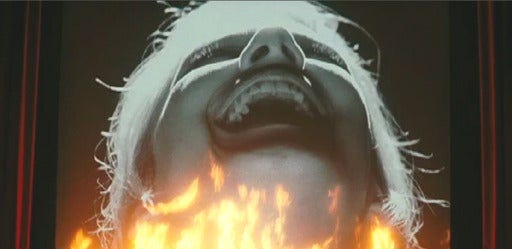
What’s interesting analytically is how the film structures this revenge. The Basterds are not soldiers. They are a revenge squad that don’t just kill Nazis—they torture them, scalp them, carve swastikas into their foreheads. The Bear Jew beats an officer to death with a baseball bat in an extended scene that emphasizes visceral impact. The climax involves burning the Nazi leadership alive in a locked theater while Shoshana, the Jewish heroine with a black boyfriend, laughs at them on the screen. And none of this is presented as a descent into brutality requiring moral reckoning. It’s presented as satisfying—as appropriate responses to Nazi evil that leave the protagonists unchanged, untroubled, triumphant.
The formal choice is significant; by setting the story in a war against an enemy of such absolute historical evil, Tarantino creates a scenario where violence can be unlimited without moral complexity or objection. Because they’re Nazis, any restraint would seem inappropriate, and any mercy would seem like a moral error. The Nazi designation answers all questions in advance.
- Designate enemy as absolute evil (Nazis/slavers).
- Grant protagonist absolute righteousness (victim/liberator).
- Aestheticize revenge (beautiful violence, satisfying deaths).
- Provide cathartic completion (triumph without cost).
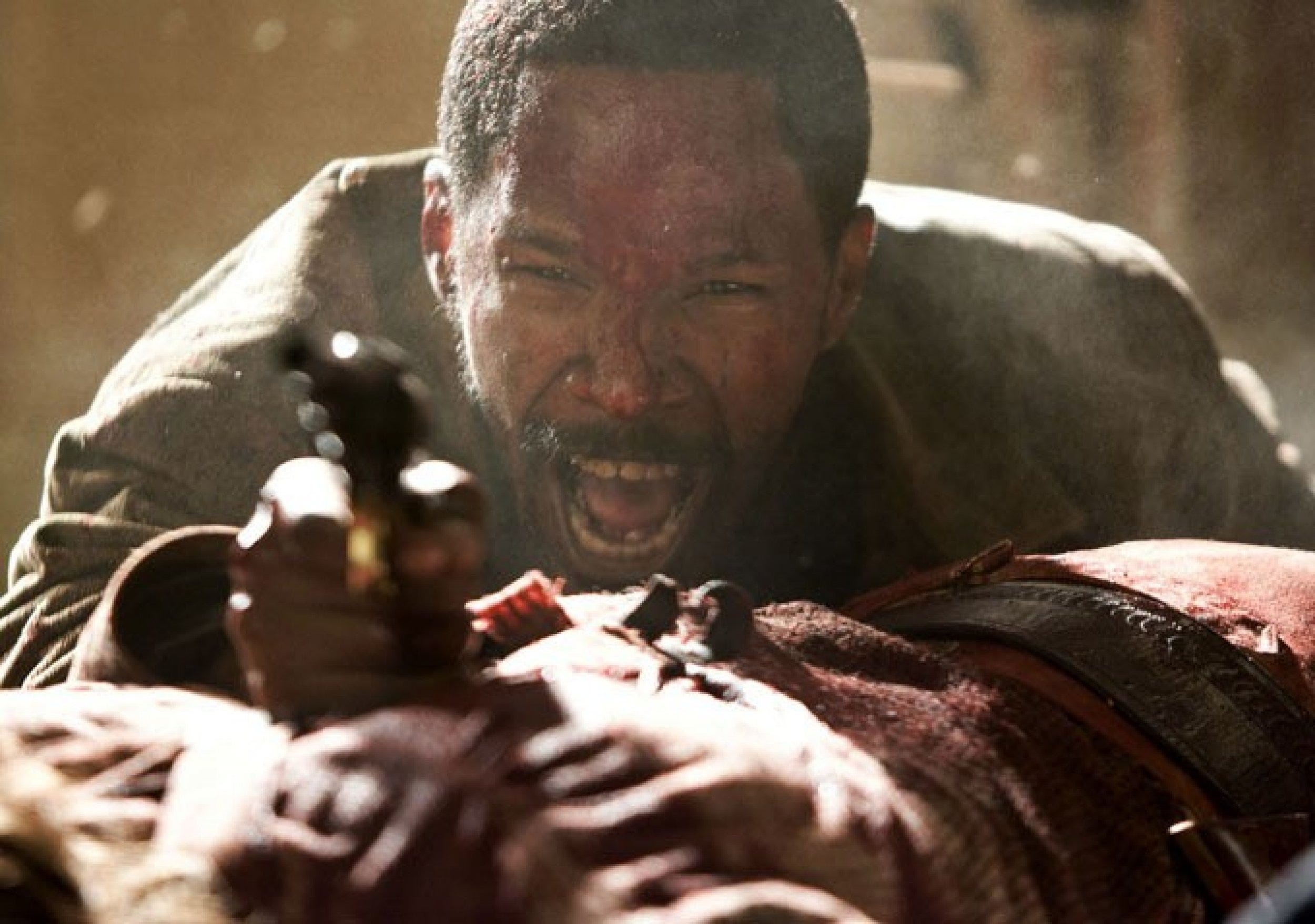
Django Unchained (2012) operates similarly. It’s a revenge fantasy about slavery—Django (Is Django Hamas or Django Israel?), freed from bondage, returns to rescue his wife and kill those who enslaved, tortured and separated them. Again the moral scenario is straightforward: slavery is absolute evil, slavers are villains, and Django’s revenge is justified. As fiction, as fantasy, this is unproblematic.

But again, the formal structure of the Fanonian revenge narrative is revealing. The film isn’t primarily interested in slavery as a system or in the experience of the enslaved. It’s interested in the pure joy of revenge executed masterfully and artistically—in the satisfaction of watching slavers suffer. The violence is extensive, creative, and presented as cathartic. The plantation owners are shot, overseers are blown apart, the entire estate is destroyed in fire and blood. And like Basterds, this revenge leaves Django liberated, certain, and triumphant as the plantation burns behind him. Evil is absolute, violence against it is unproblematic, satisfaction in that violence is appropriate, and revenge is complete without remainder. There’s no aftermath, no psychological cost, no recognition that becoming skilled at killing might change you, no acknowledgment that even justified violence might haunt you. Just resolution, satisfaction, triumph. Beautiful liberal surface life!
Evil is absolute, violence against it is unproblematic, satisfaction in that violence is appropriate, and revenge is complete without remainder … Now, these are movies.
Now, these are movies. Thrillers. No one watches them believing they’re documentary realism or moral philosophy. They’re designed to entertain, to provide satisfaction, to let audiences experience catharsis about historical evils through fictional revenge scenarios. What makes them significant as cultural artifacts is their timing and their influence. These films appeared and became culturally prominent at the exact moment when this same moral worldview was migrating from fiction into political discourse about actual conflicts. The films were part of the emerging phenomenology of righteous sadism. In the immediate aftermath of the October 7th massacres in southern Israel, the public debate could have been formed (and indeed I heard it explicitly stated, in these terms) as: Who is the real Django Unchained, Hamas or Israel? The question is merely about who should be on the receiving end of limitless violence.
The Post-Christian Condition

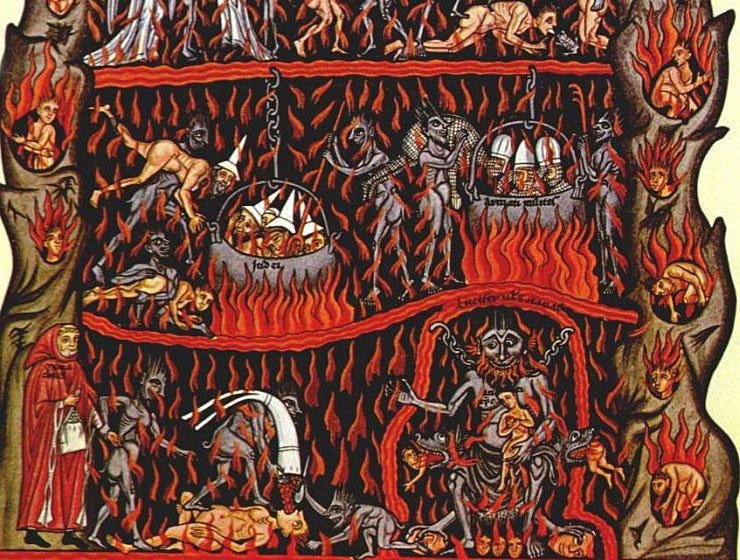
Moral sadism has always existed—in the Inquisition’s elaborate tortures, in anti-Jewish pogroms where mobs took pleasure in Jewish suffering, in religious wars, in the infernal literature of Christianity and Islam that lovingly detailed the eternal torments awaiting sinners. How many preachers dwelt, and still do, on the sufferings of the damned with evident relish?
What distinguishes our age and its secular moral sadism is that we have made moral sadism the morality of public and political life. It is no longer exceptional violence requiring authorization or theological justification from a deity. It is how much of our politics operates, how movements mobilize, how ordinary people demonstrate civic virtue on social media every day.
If the anthropological stabilizing image for the religious worldview was Imago Dei—man created in God’s image—the defining image for the modern post-Christian world is Imago Nazi. Identity is no longer constituted through participation in the divine image, through positive relation to transcendent good, through the construction of a life oriented toward God. Identity is constituted through opposition to the negative image, through resistance to absolute evil, through a perpetual stance against the Nazi, the fascist, the genocider, the colonialist.
I am because I am not-Nazi, I’m not Zionist, I’m not white, I’m not Islamist, etc. My identity exists in the opposition. My meaning derives from the resistance. My virtue demonstrates itself through the intensity of my hatred for the properly designated enemy. (And isn’t it then to be expected, by a dialectical logic, that others would rise to construct an identity for themselves against you, by embracing that which you built your identity against? Embracing, that is, so as to outdo you, the fiction of the Nazi and the Fascist which you yourself created? Who is more “progressive” here? Who is cleverer? Who is ahead?).
This is not merely a shift in emphasis or a different theological priority. It is a fundamental inversion of the anthropological structure. Imago Dei establishes what you are—a creature bearing divine image, participating in goodness, oriented toward transcendence. Imago Nazi establishes what you oppose—you exist as negation, as resistance, as eternal vigilance against recurrence of absolute evil. (The entire meaning of Palestine is to negate Zionism. The entire meaning of Israel is its mission to stop the rising tides of radical Islam.)
The implications cascade:
First, forgiveness becomes betrayal. If your identity consists of opposition to Nazis/Zionists/colonialists/racists/Islamists, then forgiving them dissolves the very structure that constitutes you. To forgive is not mercy but self-erasure. To move past grievances is identity collapse. To suggest reconciliation is complicity. You must maintain permanent unforgiveness because unforgiveness is not a feeling you have, but the structure of who you are.
To move past grievances is identity collapse.
Secondly, victimhood authorizes sadism. Christianity’s sacred victim was the Suffering Servant—Christ on the cross absorbing violence, forgiving executioners, transforming suffering into redemption through refusal to return evil for evil. The post-Christian sacred victim retains the same position of moral authority but inverts what that position authorizes. The Fanonian victim’s obligation is no longer to forgive but to achieve righteous revenge, no longer to absorb violence but to return it creatively, no longer to redeem through suffering but to be healed through the torturer’s role. “From the river to the sea” is not a geographic claim but a Fanonian therapeutic program. The violence and the murder are the healing (Sartre).
Lastly judgment cannot be deferred. Christianity placed final judgment beyond history: “Vengeance is mine, I will repay, says the Lord”. This eschatological deferral was essential to limiting present violence. You were forbidden to execute ultimate judgment because that belonged to God, to eternity, to a realm beyond human authority. You could oppose evil, could even kill evildoers, but could not access the pleasures of ultimate judgment, could not inflict the eternal torments, could not take the satisfaction of final vengeance—because these belonged to God alone.
But if there is no God and no eternity, if there is only history and only this moment, then judgment must occur now. The apocalypse is not coming; it is here. The Nazis are not a historical event to remember; they are present. Every election is an existential threat; every policy dispute is civilization’s last stand; every conflict is the final confrontation between good and evil that must be resolved immediately because there is nowhere else to resolve it.
The eschatological drama that Christianity placed beyond history has been imported into history, made immanent, transformed from ultimate future to perpetual present. And once the apocalypse is now, once judgment cannot wait, the restraints become meaningless and thus collapse. We must become the judges ourselves, must execute the punishments ourselves, must access the pleasures of sadism ourselves as the righteous fulfillment of our role in the apocalyptic present.
Once the apocalypse is now, once judgment cannot wait, the restraints become meaningless and thus collapse. We must become the judges ourselves, must execute the punishments ourselves, must access the pleasures of sadism ourselves as the righteous fulfillment of our role in the apocalyptic present.
We are no longer made in God’s image. We are made in the Nazi’s image—or rather, we are made against it. Thus modern meaning requires enemies. This is perhaps the deepest implication: If identity is Imago Nazi, constituted through opposition, then enemies must be perpetually discovered and maintained. Without Nazis to oppose, identity dissolves. Without fascism to resist, meaning evaporates. Without genocide to prevent, the self that exists only in opposition ceases to exist.
The Dialectic and Trap of Moral Sadism
A mimetic dynamic repeated itself constantly during the two cruel years of the Gaza war: a pro-Palestinian activist exhibits, through photographs or statistics, the devastating loss of Palestinian civilian lives. Then pleads with Zionist opponents “Is this justice?”.
We all live in the same morally sadistic universe now. The other side understands very well, intuitively if not articulated, that this is a trap. If they concede the tragedy and injustice of thousands of lost innocent lives, they have already admitted guilt and submitted themselves to the moral sadism sure to follow. It would justify their own annihilation. To concede guilt is to enter a position of symbolic surrender—to accept one’s own role as the “absolute evil” who may now be punished indefinitely.
Thus they are compelled to rationalize or deny such atrocities as just a consequence of electing Hamas, or of failures of Palestinian society, or of losing a war, or as fake information altogether. Moral reasoning collapses into reciprocal demonology. Any form of moral recognition risks self-annihilation, internalizing the same structure: my violence is justified because yours is sadistic.
But the situation is asymmetrical. The trap that is laid depends on initiative and size of tragedy, but once laid, it has already overdetermined the villainy of the other side. If they confess, they are a villain. If they reject or deny it, this becomes even more damning evidence of their monstrosity. Moral sadism is justified either way.
This generates a certain dialectic; each side’s claim to innocence depends on its ability to inflict or/and endure suffering while maintaining the posture of moral superiority. Violence becomes not a means to defined political ends but ritual purification, reassertion of meaning in a world where meaning exists only through opposition to absolute evil. The pleasure taken in enemy suffering is essential—it proves the righteousness of one’s position, demonstrates the authenticity of one’s opposition, and confirms that one truly stands against the Nazi.
Once one commits to moral sadism, the trap is perfect because it operates at the level of identity itself. To recognize complexity or tragic dimensions where both have suffered—this would dissolve the structure providing meaning, identity, righteousness in an age of Imago Nazi where these exist only through negation.

We have effectively created a world where moral recognition is weaponized and any acknowledgment of the other’s suffering authorizes unlimited violence against oneself. To say the truth is to be annihilated. This is the dialectic, self-sustaining, escalating, inescapable without reconstructing identity on some basis other than opposition—and in a post-Christian age that has lost all positive content, such reconstruction is impossible.
This dynamic now plays out across the grievance Olympics, our competitive hierarchy of victimhood and oppression that structures contemporary life. The worst thing that can happen to a modern person is to be accused of a major sin: racism, sexism, Islamophobia, etc. (Who of us hasn’t had nightmares about being falsely accused of bigotry or sexual harassment?) Even at the level of unproven accusations, no amount of penance shields one from annihilation or from becoming the subject of much joy and pleasure taken by the mass of inquisitors relishing the righteous torment of the guilty others.
The accusation itself is the trap. To deny the charge is to provide evidence of the very sin imputed—your denial proves your racism is so deep you cannot see it, your defensiveness proves your fragility, your appeal to context proves your privilege. Believe all victims. To confess is worse; it establishes guilt, authorizes punishment, and provides no redemption because there is no redemption available. The confession ratifies your status as absolute evil whose destruction becomes virtuous. And the ingenuity of this moral complex is that none of us is actually innocent. If guilt is suspected, guilt will be found. Justification by victimhood, eternal damnation by accusation.
The accusation itself is the trap. To deny the charge is to provide evidence of the very sin accused—your denial proves your racism is so deep you cannot see it, your defensiveness proves your fragility, your appeal to context proves your privilege.
The trap has no exit because it is not designed to produce correction or growth or anything morally serious. It is designed to produce the satisfying spectacle of designated evil being humiliated and destroyed while observers experience righteous pleasure in the destruction. The person accused becomes the sacrifice through which the community demonstrates its virtue, the scapegoat whose suffering proves the righteousness of those inflicting it.
And it is all for the sake of pleasure. The destruction of the racist, the sexist, the anti-Palestinian bigot—this provides satisfaction, entertainment, the pleasure of participating in righteous violence without guilt. Each denunciation proves the denouncer’s virtue. Each insult demonstrates proper consciousness.
The Negative Age

At the deepest level, this is a post-Christian pathology that produces a self-devouring moral law. Because there is no grace, no forgiveness, no possibility of redemption, and because identity in the age of Imago Nazi requires perpetual opposition to designated evil, the negative system must continuously produce new sinners, new guilty parties, new targets for righteous destruction. Yesterday’s ally becomes today’s problem, and, perhaps, becomes tomorrow’s cancelled monster. Yesterday’s Jews become today’s Nazis. No restraint, only license. The revolution devours its children. Without sinners to destroy, how could the righteous prove their righteousness?
The inflation of evil ultimately achieves what metaphysical nihilism could not: it abolishes meaning in the name of morality. It allows the postmodern conscience to preserve its moral self-image even as it destroys the very conditions of moral judgment, all through pure negativity. Identity is constructed in the negative, functioning with a morality constructed in the negative. This is the epistemological structure of modern American culture and its identity politics.
Ahis structure of post-war functional nihilism first emerged among Third World intellectuals before it was discovered, celebrated, and universalized by the American university (you can read about it here and also here). The nexus between the annihilation of truth and the permission of ecstasy in violence first manifested in the postcolonial world, in those revolutionary movements that sought to remake history through negation alone. In the decolonizing mind, the West was evil incarnate, and liberation required not reform but purification through violence, the full negation of the Other. Redemption through blood, sanctity through rage. Africa is the inverse of Europe. Palestine is the inverse of Zionism. The only possible content of the self and identity is the murder of the other, a formula repeated endlessly in the literature of decolonization from France, Algeria, Africa, Palestine, and elsewhere. (This itself has a German Hegelian philosophical Nationalist and Marxist pedigree, self-realization through the elimination of Jews, of capitalism, etc).
The nexus between the annihilation of truth and the permission of ecstasy in violence first manifested in the postcolonial world, in those revolutionary movements that sought to remake history through negation alone.
By the late twentieth century, this negative moral theology reached its most perfected form in Islamist and jihadist movements, where the pleasure and joy experienced in the obliteration of the sinner became the sacrament of truth. In them, the ecstatic violence of the righteous found its purest expression—religion emptied of compassion, morality divorced from mercy, transcendence replaced by destruction. What began in the “Third World” as revolutionary catharsis has, through the cultural machinery of the American university, been universalized and crowned as true liberation. The postcolonial ethos is today’s global pedagogy of moral negation, and the postcolonial intellectual is the priest of the age. The West is merely catching up with where others have already been for decades. Western experts thought the Middle East was stuck in the past, while it was actually waiting for us in the future. The West isn’t exporting modernity to the Third World but importing the Third World’s perfected negative theology back to itself.
*Note:

Recently, on social media, people discussed how the wife of the new Mayor of NYC was already asking people to accuse Israel of genocide merely days after Israel began its Gaza operations following October 7th. This was a strategy that was clearly obvious then, but it demonstrates my point on how these terms actually function as a justification of moral sadism and extreme violence. They are not meant to help the Palestinians but to annihilate the Israelis. The Third World intellectuals didn’t just master the language and theology of our negative age, but, as I keep repeating, they are actually the ones who invented it. Westerners are their students. It is extremely difficult to compete with them at their own game. They teach us what meaninglessness and will to power really are. How to actually live with nihilism. Thank you, Columbia! Thank you, Harvard! Thank you, National Endowment for the Humanities! Thank you to all the wonderful donors! Thank you to all those who gave us these amazing teachers!
This essay was previously published here.