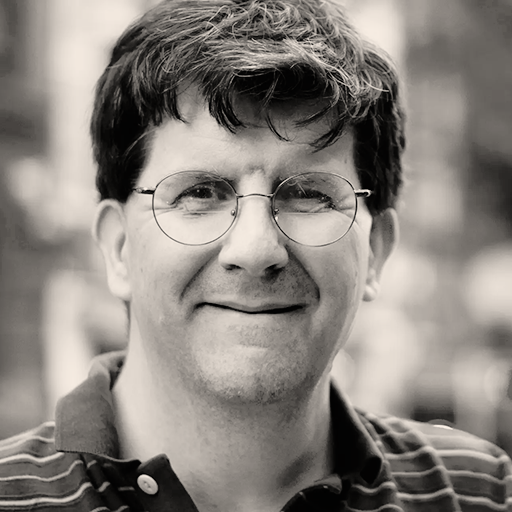
In 1992, our author Kirby Olson conducted an interview with art critic and philosopher Arthur Danto (1924-2013). Danto is known for his work on Nietzsche, and on Kant and Hegel’s aesthetic theory, while his book on Sartre was standard reading for young philosophy students in the 1990s all over the world, including this magazine’s publisher.
Today Café Américain publishes for the first time Kirby Olson’s interview with Arthur Danto of 34 years ago—about the limits of civility, beauty, ugliness, and the left-wing colonization of art—in the hope of reviving some of the thoughts central to art theory that have been buried in decades of (mostly woke) babble, i.e. modern art criticism. Here is the full text:
Arthur Danto has written art criticism for the Nation since 1984. A veteran of WWII, Danto has spent the last 40 years teaching philosophy at Columbia. He is a painter, a collector and a gentleman. Unfortunately, I am none of these things, and so I asked him a lot of questions about filth in art.
On October 14, 1992, Danto lectured on “The Morality of Beauty” at Kane Hall, on the University of Washington campus in Seattle. The following is part of a conversation I had with him before the event.
KO: You seem interested in art’s effect on community.
AD: I advocated removal of Richard Serra’s Tilted Arc. The arrogance of the art community was almost … unjustifiable. But am I communitarian? I don’t think anybody knows enough about communities for me to say what art’s effect is on them.
KO: And yet you talk about Kant’s “disgust” as an aesthetic criterion which mars beauty. You wrote against Fassbinder’s supposedly anti-Semitic play, which you felt should be shut down.
AD: A person cannot write whatever he wants, and then just say, “I’m an artist!” I really do in a funny way come down on the side of colleges who’ve decided that there is some language you cannot use in an academic community. Universities do have an obligation to instruct in civility. I am not so worried about political correctness. I mean, there are words that hurt. I think that to stand up and say “You cannot use those words here” is legitimate.
KO: You talk about community standards for art, and disgust marring beauty, and yet there is an excremental canon in this century’s art. I’m thinking of Duchamp’s Fountain, Manzoni’s cans of fecal matter, Warhol’s piss paintings, Karen Finley’s yams, and then, of course, Serrano’s Piss Christ.
AD: Well, has this work really received that much attention? Manzoni’s very recondite; Finley and Serrano are mostly interesting because of the funding issues; and even Duchamp’s Fountain did not make much of a ripple outside of a certain circle. This concern with excretory functions—it’s not quite the problem I have with hurtful language. I tried to defend Serrano at the NEA by citing Yeats’s “Love has pitched his mansion in the place of excrement”, a very beautiful line. During Christ’s ascent up Mount Golgotha, they hissed, they threw things, they spit—they might as well have pissed on him. With Karen Finley, it’s a bit of a cheap shot, though she was making a metaphorical statement on the condition of women.
KO: Isn’t she just a push-button leftist posing as an artist?
AD: I think that all the time. It’s too bad, you could knock Karen Finley out on the grounds of quality any time, but you don’t dare. She’s quite poor. With her it’s almost a reflex, whereas I’m not sure if Serrano’s very good, but at least there’s a thought there.
KO: In his Phenomenology of Spirit, Hegel says, “We can understand something of the perversity of the universal spirit when we reflect that its point of propagation is also its point of urination”.
AD: Fantastic! It’s just the sort of thing Hegel would find worth puzzling over.
KO: What’s your religious background?
AD: We’re Sephardic Jews.
KO: I like the order and beauty in religious writers: Berkeley, Kierkegaard, Klossowski, Teresa de Avila. I don’t know about Bataille. I think he wanted to be religious, but couldn’t face up to it, and so it came out a gnarly mess.
AD: I loathe Bataille. I can’t stand his writing. By and large religion is, I think, a bad thing, but those old discussions of the Trinity are very interesting. Matter and spirit …
KO: You’ve written that “Art comes to an end when it becomes philosophical: i.e. when it becomes conscious of itself”. If a critic makes an artist self-conscious, is not that critic therefore bringing that artist’s work to an end?
AD: I wasn’t thinking of individual artists when I wrote that; I was thinking of history, but [the artist] could be liberated to do things that were deeply more important.
KO: Do you think a critic has the right to attack a painter? Oftentimes, in my experience, this creates controversy, and soon there will be other critics who join the fray on the other side. Isn’t this the dialectic in action?
AD: A couple of issues ago, my friend Brice Marden was attacked in the New Yorker. It was a vicious attack. That’s unfair in a really deep way—there is no recourse. I get the same thing because I am a public figure. I get reviewed savagely. For artists it’s even worse. It’s like a rape. You’re humiliated before your friends. I write mostly about museum shows, about the dead.