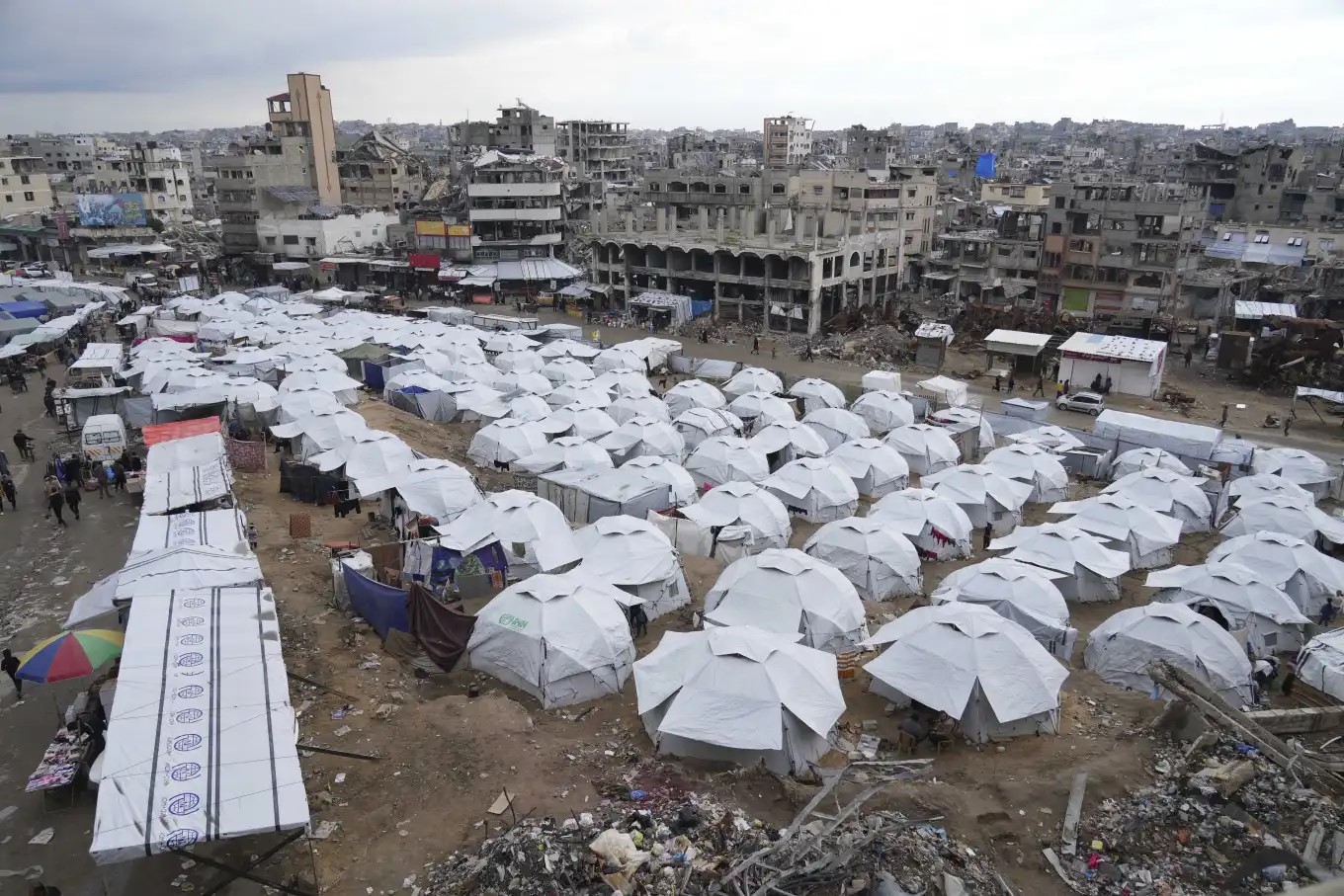
White tents have evolved over time from functional shelters to potent visual symbols. Associated in the 19th century with military camps and field hospitals, where their pale fabric evoked hygiene and neutrality, they rapidly moved into the domain of entertainment and public life, hosting fairs, circuses, weddings, and political gatherings. In the decades that followed WWII, their presence grew, becoming both a symbol of celebration and a tool of temporary control, frequently setting the stage for collective rituals or propaganda. In the 21st century, with the rise of synthetic materials and global media, white tents have evolved into a universal scenography of emergencies and mass events, reaching their symbolic climax in recent years marked by controversial health crises and social upheavals, including the persistent migratory pressure.
No longer only a fixed component of disaster scenarios in films (Outbreak, war films such as Glory, and/or the tsunami film The Impossible), white tents, canopies, and portable pavilions have emerged as key elements of the visual architecture of the real, contemporary world. Once erected as medical infrastructure during the pandemic declared by the WHO in 2020, they quickly became emblematic symbols of nearly every crisis situation, including wars, natural disasters, political protests, student marches, mass shootings, and nationalist spectacles. In their seemingly functional form and overtly humanitarian purpose, white tents carry multiple meanings: they act as backdrops for staged scenes, zones where normality is suspended, and simultaneously generate a new kind of order grounded in states of emergency and real or feigned concern for anonymous individuals. In this sense, white tents are no longer just instruments of temporary crisis shelter, but have become media and political markers, spaces of orchestrated reality and narrative control.
White tents are no longer just instruments of temporary crisis shelter, but have become media and political markers, spaces of orchestrated reality and narrative control.
During the controversial pandemic labelled COVID-19, white tents began to sprout like weeds from the concrete sidewalks of cities around the world, part of a sanitized pandemic stage set. Positioned in squares, in front of hospitals, sports arenas, and shopping malls, they offered some people a sense of safety and hope, while instilling fear and discipline in others. Still others watched with confusion or amusement. In many cultures, the color white symbolizes purity and hope, which is why it’s widely used for weddings, celebrations, and solemn occasions. While the sterile whiteness of these tents might suggest neutrality and innocence, inside them, programs of control orchestrated by state, para-state, and supranational structures were established: testing, triage, isolation, vaccination, etc. People entered the tents as if entering voting booths, but they were leaving behind, rather than exercizing, part of their freedom at the entrance: the white tent became a zone of suspended sovereignty. At the same time, it served as a training ground for mass obedience and as a visual reminder that the reality we took for granted could be quickly reshaped, and then reshaped again. In Belgrade’s Tašmajdan Park, three sharp-peaked white tents once used as a nasal swabbing station were overnight transformed into sales kiosks for a honey fair.
In Belgrade’s Tašmajdan Park, three sharp-peaked white tents once used as a nasal swabbing station were overnight transformed into sales kiosks for a honey fair.
In Ukraine and Gaza, white tents appear as humanitarian bases, field hospitals, and shelters, but they’re constantly accompanied by media attention, the aesthetics of selective compassion, and a kind of spectacle of suffering. Cameras zoom in on children and their toys under the tents (or rubble), mothers breastfeeding, and doctors in protective suits, evoking the visual grammar of the pandemic. On white fabric fluttering in the wind, like a movie screen, images are projected of “civilized” (Western) aid to the “victims”, though it remains unclear exactly who is being helped, when, and why. These tents are installed by militaries, NGOs, and the United Nations, each with its own narrative and geopolitical interests.
White tents are increasingly becoming the default response to natural disasters, all of which are officially explained through the sole lens of “climate change”. After devastating floods in Pakistan, Slovenia, Germany, and Italy, and wildfires in California, Greece, Cyprus, Canada, and Australia (where most were proven to have been caused by arson), the scenes are always the same: rows of white tents on sports fields, parking lots, and roadside areas, serving as shelters for evacuees, tent villages for “homelessness epidemics”, and as stages for politicians, TV crews, and humanitarian PR campaigns. In the case of strong earthquakes, such as in Turkey, Nepal, or Haiti, tents turn into temporary cities, testifying to systemic collapse, poor construction standards, slow government response, and unequal access to aid. In all these scenarios, the white tent operates as a sign of temporary care and refuge.
In the current civic protests against a tyrannical regime in Serbia, particularly striking are the images of student columns marching on foot from across the country toward Belgrade. They do not arrive silently but through a carefully choreographed performance involving banners, megaphones, yellow vests, cameras, and interviews. The most potent scenes are the nighttime encampments, where students sleep in makeshift tents along the roadside, evoking imagery from wartime or “pandemic” eras. This form of self-imposed exposure carries a powerful charge of symbolic martyrdom, evoking empathy by projecting a message of conscious sacrifice, perseverance, and the seriousness of the struggle. In this context, auto-victimization fits neatly into the dominant narrative of spectacle politics: suffering becomes a public act, and the white tent becomes a tool of political self-promotion.
In Belgrade these days, white tents are being raised by both sides of the political divide. Regime activists present them as symbols of alleged concern for schoolchildren and education, while students, opposition groups, and civic movements use them as spaces of protest against those same authorities. Tents set up in front of government buildings, ministries, and schools have ceased to be places of assembly and have instead become stages for performance. The white expanse stretching from Belgrade’s Pioneers Park, near the President’s office, to the National Assembly now evokes a sprawling paramilitary camp of 1990s war veterans loyal to the regime, ready for movement and action.
In Belgrade, white tents are being raised by both sides of the political divide.
Using witty slogans, loudspeakers, lighting, and cameras, both sides speak the “language of tents” to portray the other as illegitimate. In this dual encampment, the tent ceases to be a symbol of alternatives and becomes a sign of collapse, a frozen political stage where nothing is resolved, only endlessly re-enacted. The primary demand of the months-long blockades, triggered by systemic corruption that resulted in civilian casualties, was once again the call for elections, which the ruler is expected to steal yet again, this time under the guise of “democratic procedures” and with the stamp of “international legitimacy”.
Today, white tents can be seen as spatial metaphors for global instability, but also as tools for manufacturing and managing artificially induced crises. Figuratively speaking, they are white fabrics for black scenarios: flexible, adaptable, and suited to all kinds of performances, including medical, military, political, cultural, climate and energy-related ones.
Today, white tents can be seen as spatial metaphors for global instability, but also as tools for manufacturing and managing artificially induced crises.
Global elites, whether political, economic, or media-oriented, use white tents as a screen against which performances are staged to shape public opinion. Whether the narrative involves fighting an “invisible enemy” such as a virus, confronting a so-called enemy of the nation, or waging a battle for the future of our children, each storyline relies on a simple yet effective theatrical set, such as the white tent. In an age where reality is increasingly staged, the white tent is no longer a temporary shelter. It has become a lasting symbol of an era in which reality has been transformed into a media event, with the white fabric structure now serving as a visual sign of temporary authority, crisis, or social spectacle, depending on the context.